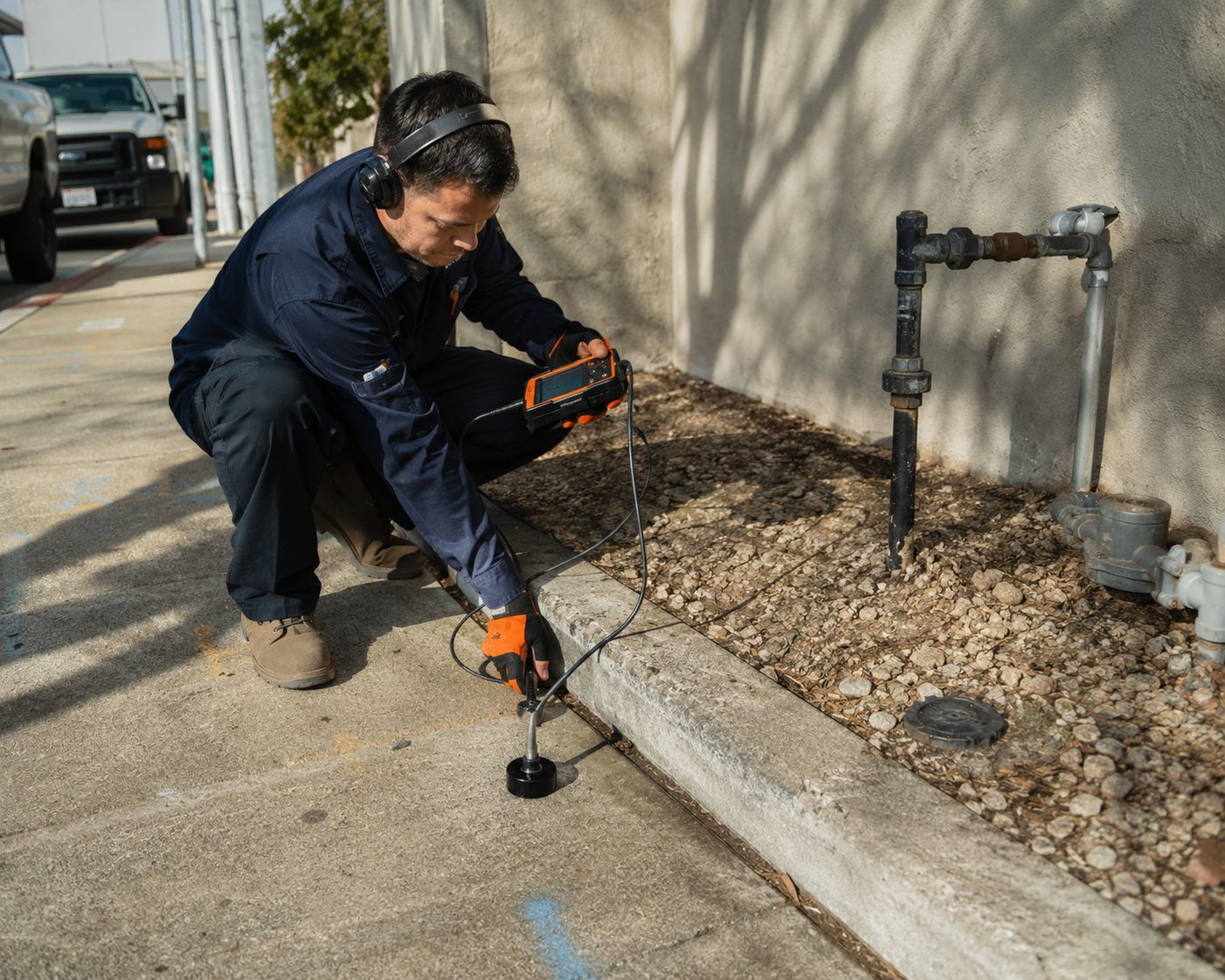
Most water leak detection jobs take between 1 and 3 hours, though complex cases involving slab leaks or large properties can take a full day. The exact time depends on your property type, the detection method used, and how hidden the leak is. This article covers what drives those timeframes, what happens during each stage, and what Sydney and NSW homeowners should expect when they book a leak detection service.
Understand the Typical Leak Detection Timeline
A standard residential leak detection job in Sydney follows a fairly predictable sequence. Knowing the stages helps you plan your day and avoid being caught off guard.
Here is how a typical appointment breaks down:
- Initial inspection (15-30 minutes): The plumber walks the property, checks visible pipes, meters, and fixtures, and asks you about any symptoms you have noticed.
- Equipment setup (10-20 minutes): Acoustic devices, thermal cameras, or pressure testing gear are prepared and calibrated before use.
- Active detection (30-90 minutes): This is the core phase. The technician systematically traces the pipe run and narrows down the leak location.
- Confirmation and marking (10-20 minutes): Once located, the leak point is confirmed and marked. The plumber documents findings for your records.
- Report and next steps (10-15 minutes): You receive a verbal or written explanation of what was found and what repairs are needed.
For a straightforward leak in an accessible area, you are typically looking at 1.5 to 2 hours total. That estimate holds for most suburban Sydney homes and regional NSW properties alike.
Compare Detection Times by Method
The method your plumber uses is one of the biggest factors in how long leak detection takes. Different tools suit different leak types, and each has its own time requirement.
| Detection Method | Best Used For | Typical Time |
|---|---|---|
| Acoustic listening devices | Underground pipes, slab leaks | 1 to 3 hours |
| Thermal imaging camera | In-wall leaks, radiant heating pipes | 30 to 90 minutes |
| Pressure testing | Confirming pipe integrity, post-repair checks | 30 to 60 minutes |
| Tracer gas detection | Deep or hard-to-access leaks | 1 to 4 hours |
| CCTV pipe inspection | Drain and sewer lines | 1 to 2 hours |
| Visual and dye testing | Toilets, simple fixture leaks | 15 to 30 minutes |
Tracer gas and acoustic methods take longer because they require a slow, methodical sweep of the pipe run. Thermal imaging is often the fastest non-invasive option for in-wall leaks when temperature differences are clearly visible.
JSW Plumbing uses a combination of these methods depending on what the property and symptoms call for. Using the right tool from the start saves time overall.
Explore How Property Type Affects Detection Time
The size and construction of your property has a direct impact on how long leak detection takes. A compact apartment in the Sydney CBD is a very different job to a large rural property in regional NSW.
| Property Type | Likely Detection Time | Common Complicating Factors |
|---|---|---|
| Apartment or unit | 1 to 1.5 hours | Shared walls, body corporate access rules |
| Standard suburban home | 1.5 to 2.5 hours | Concrete slabs, multiple wet areas |
| Large or older home | 2 to 4 hours | Older pipe materials, extensive pipe runs |
| Commercial property | 3 to 8 hours | Multiple floors, complex plumbing layouts |
| Rural or acreage property | 2 to 6 hours | Long underground supply lines, limited access |
Older homes across western Sydney suburbs like Parramatta, Penrith, and Blacktown often have galvanised iron or polybutylene pipes that corrode and leak more frequently. These materials also make detection harder because they carry sound differently than copper or PEX piping.
Identify the Factors That Slow Detection Down
Sometimes a job that looks simple on the surface takes longer than expected. Understanding why helps you set realistic expectations and avoid frustration.
These are the most common reasons leak detection takes longer than average:
- Concrete slab construction: Many Sydney homes built from the 1960s onward have pipes running under a concrete slab. The acoustic equipment has to scan the entire slab area methodically to pinpoint the exact spot.
- Multiple potential leak sources: If your water bill has been high for months, there may be more than one leak. Each one needs to be found and confirmed separately.
- Restricted access: Tight crawl spaces, locked meter boxes, or strata building rules that limit where a plumber can work all add time.
- Background noise interference: Acoustic detection in busy urban areas like inner Sydney can be affected by street traffic, neighbouring construction, or running appliances.
- Intermittent leaks: Some leaks only occur under certain pressure conditions. These are harder to catch and may require multiple pressure tests.
- Poor pipe documentation: Older properties often have no reliable plans showing where pipes run. The technician has to trace the layout manually before detection can begin.
If you can gather any information before the plumber arrives, such as when you first noticed a wet patch or which areas of the yard have unusually green grass, that head start can cut 20 to 30 minutes off the job.
Learn What Happens After Detection Is Complete
Leak detection and leak repair are two separate jobs. Once the detection phase is done, the plumber will give you a clear picture of what was found and what fixing it involves.
Detection itself does not damage your property. Non-invasive methods like thermal imaging and acoustic listening leave no marks. Tracer gas detection involves pressurising the pipe system but does not require cutting or excavation during the detection phase.
If excavation or pipe access is needed for the repair, that is scheduled separately. Knowing the exact location beforehand means the repair team digs only where needed, saving significant time and cost on the repair side.
JSW Plumbing provides a written report after every detection job. This is useful if you are making an insurance claim or need to show a strata manager or landlord what was found. Insurance providers in NSW often require documented evidence of the leak location before approving a claim.
Know What Sydney and NSW Conditions Mean for Your Job
Local conditions across Sydney and NSW play a real role in how leak detection jobs unfold. It is not a one-size-fits-all situation.
Clay-heavy soils common across western and south-western Sydney expand and contract significantly with seasonal rainfall changes. This movement puts pressure on underground pipes and causes joint failures that can be tricky to pinpoint. The pipe itself may be intact for most of its run, but the failure point sits at a joint that shifted with the soil.
Coastal properties in areas like the Northern Beaches, Sutherland Shire, and the Illawarra coast deal with corrosion from salt air, which accelerates pipe degradation and increases the frequency of leaks in older homes.
In regional NSW, long supply lines from water mains to buildings mean more pipe to cover. Properties in areas like the Blue Mountains, Hunter Valley, or Central Coast with private water tanks and pressure pumps also have more complex systems that take longer to test thoroughly.
Sydney Water and other local water authorities have specific regulations around how leak repairs must be performed and documented, particularly for properties connected to the mains. Your plumber needs to be familiar with these requirements, which is another reason to use a licensed local company like JSW Plumbing.
FAQs on How Long Does Leak Detection Take
Can leak detection be done in under an hour?
Yes, for very simple leaks such as a dripping toilet or a visible fixture leak, detection can take 15 to 30 minutes. However, most jobs involving hidden or underground leaks take at least 1 to 1.5 hours to complete properly.
Do I need to be home for the entire detection appointment?
It helps to be present at the start and end of the appointment. Your description of the problem gives the technician a useful starting point. You will also need to be there to receive the findings report and discuss next steps once detection is complete.
How long does slab leak detection take specifically?
Slab leak detection typically takes 2 to 4 hours for a standard residential home. The technician uses acoustic equipment to scan the slab systematically, which is a slow process by design. Rushing it risks marking the wrong spot, which leads to unnecessary excavation.
Will leak detection damage my walls or floors?
No. Modern non-invasive detection methods do not require cutting into walls or lifting floors during the detection phase. Damage only occurs during the repair phase, and only at the confirmed leak location. This is one of the key advantages of professional leak detection over guesswork-based repairs.
How do I know if leak detection was thorough enough?
A thorough detection job ends with a clear written report stating the exact location of the leak, the suspected cause, and recommended repairs. If the plumber cannot give you a precise location and walks away with a vague answer, the job was not done properly.
Does the time of year affect how long leak detection takes in NSW?
It can. During La Nina wet seasons, ground saturation across NSW can mask leak signals and make acoustic detection harder. Summer heat causes pipe expansion that can temporarily seal hairline cracks, making intermittent leaks harder to catch. Your plumber will adjust their approach based on current conditions.
Wrap Up and Next Steps
For most homes in Sydney and across NSW, leak detection takes between 1 and 3 hours. The method used, property type, pipe access, and local conditions all play a role in where your job lands within that range.
The best thing you can do is book detection early, before a small leak becomes a large repair bill. JSW Plumbing serves Sydney and all of NSW with professional, non-invasive leak detection using the right tools for every job type.
Call JSW Plumbing today on (02) 8520 3537 to schedule your leak detection appointment and get a clear answer fast.